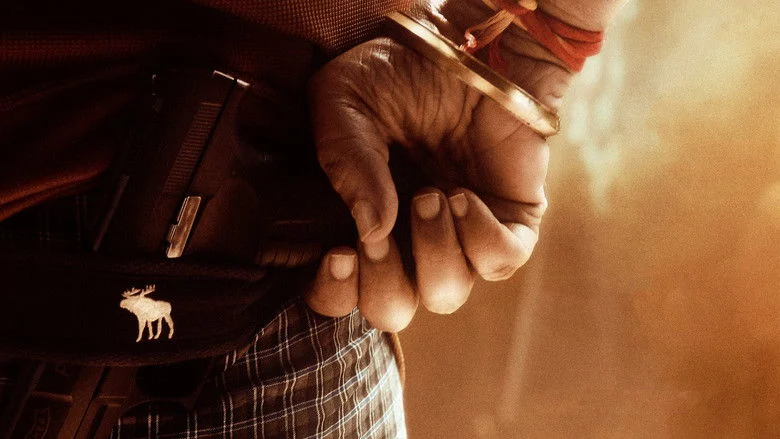
Ustaad Bhagat Singh (2026): Pawan Kalyan’s Tribal Warrior Has Heart, Not Much Else


A tribal boy named Bhagat Singh, raised on courage and a teacher’s iron-willed morality, decides that injustice ends with him — no matter how powerful the forces lined up against him. That premise, in Harish Shankar’s hands, arrives dressed in the familiar grammar of Telugu massy cinema, where conviction is worn on the sleeve and subtlety is not particularly invited inside.
Pawan Kalyan Carries the Film on Sheer Presence Alone
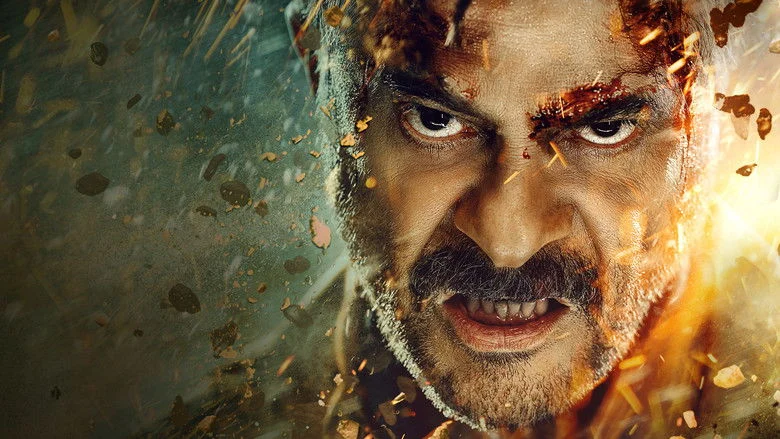
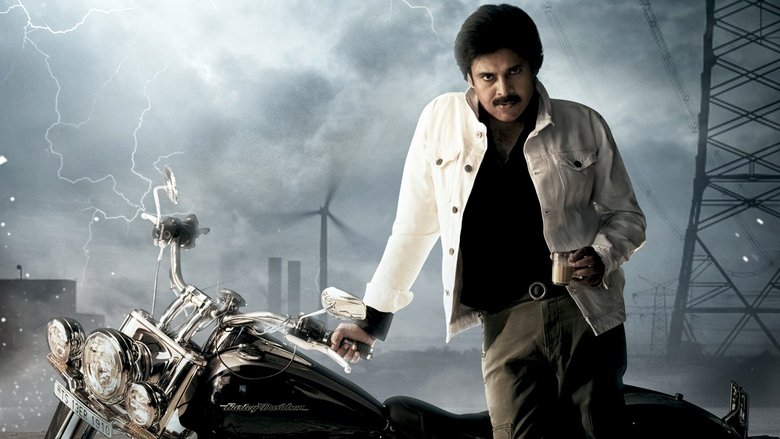
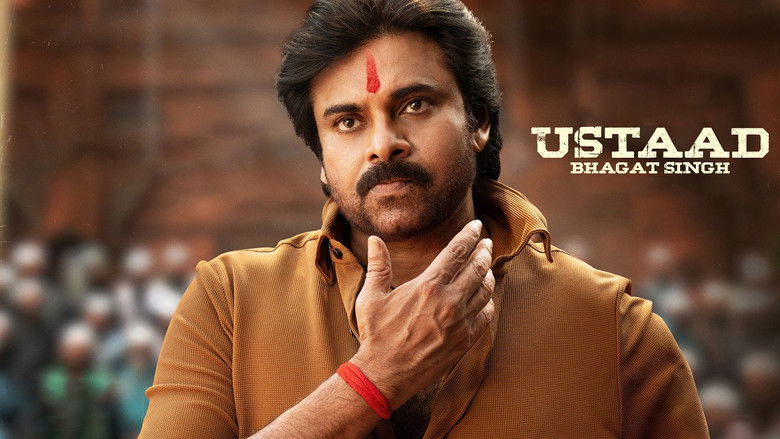
There is a reason Pawan Kalyan’s mass appeal has survived decades — the man commands the frame without apparent effort. Here, as Bhagat Singh, he inhabits a character built on moral certainty and raw defiance against systemic evil. The performance does not stretch him into unfamiliar territory, but it does not need to — the film is engineered entirely around what he already does best.
Harish Shankar Knows His Audience, Perhaps Too Well
Shankar has always been a director who trusts spectacle over nuance, and Ustaad Bhagat Singh confirms that loyalty. The screenplay — credited to six writers, including Shankar himself — has the structural confidence of a film that knows exactly what it is selling. Six writers in the credits, however, rarely signals tight, coherent writing; it signals negotiation, and that shows in how the film’s dramatic spine occasionally bends under the weight of crowd-pleasing detours.
The Action Here Is Functional, Rarely Spectacular
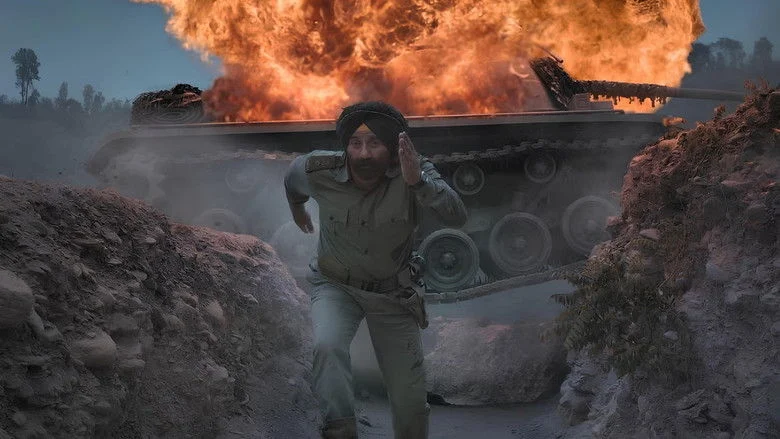
With Ayananka Bose behind the camera, the visual language has a polish that the action sequences benefit from. Bose is a cinematographer who understands scale, and there is evidence of that craft in how the larger confrontations are framed. What the film lacks, though, is a single action setpiece distinctive enough to lodge itself in memory — the sequences feel competent rather than crafted with any particular personality.
A Supporting Cast That Deserves More Room
Ashutosh Rana and Nawab Shah are names that suggest genuine antagonistic weight, and the film does position them as forces Bhagat Singh must reckon with. I find it genuinely frustrating when a villain roster this credible is reduced to genre furniture rather than fully drawn opposition. Sreeleela and Raashi Khanna are present, but the research tells us nothing specific about how their characters function — which may itself say something about how much narrative real estate the film allocates to them.
Audience Reception Has Been the Film’s Real Measure
With no critical aggregates available at the time of writing, the film’s reception remains an open question in measurable terms. What is clear is that Ustaad Bhagat Singh is built to function as a communal theatrical experience — the kind of film calibrated for whistles, not reflection. Whether that proves enough to sustain its run will depend on how hungry the Telugu-speaking audience is right now for a straightforward, values-forward massy entertainer without the complexity that post-pandemic blockbusters have occasionally attempted.
Devi Sri Prasad’s Music Does the Expected Heavy Lifting
Devi Sri Prasad is practically a genre institution at this point, and his score for this film will almost certainly deliver the rhythmic momentum these productions require. Whether the album contains anything that outlasts the theatrical run is a separate question — DSP at his most functional is still better than most at their peak. The music here appears designed to amplify the film’s emotional beats rather than exist independently of them.
If you are walking into Ustaad Bhagat Singh expecting Harish Shankar to have reinvented anything, adjust those expectations before the interval. This is a film that delivers a specific kind of Telugu commercial cinema experience — loud, earnest, morally unambiguous — and delivers it with professional competence. Watch it in a packed single-screen or a large multiplex hall where the energy of the audience becomes part of the film’s texture; on an OTT screen, its mechanics will likely feel more exposed.
Ustaad Bhagat Singh is worth one theatrical watch for committed Pawan Kalyan loyalists, but for anyone expecting Harish Shankar to push beyond his comfort zone, this sits at a generous 2.5 out of 5 — a film that plays it safe when its own hero is built to do the opposite.
Ankit Jaiswal is the Chief Author, covering Indian cinema and OTT releases with honest, no-filler criticism. An SEO strategist by background, he brings a research-driven approach to film writing, cutting through hype to tell you exactly what's worth your time.