Muga Naga (2026): A Crime Thriller That Drowns in Its Own Silence


Muga Naga (2026): A Crime Thriller Buried Under Its Own Ambiguity
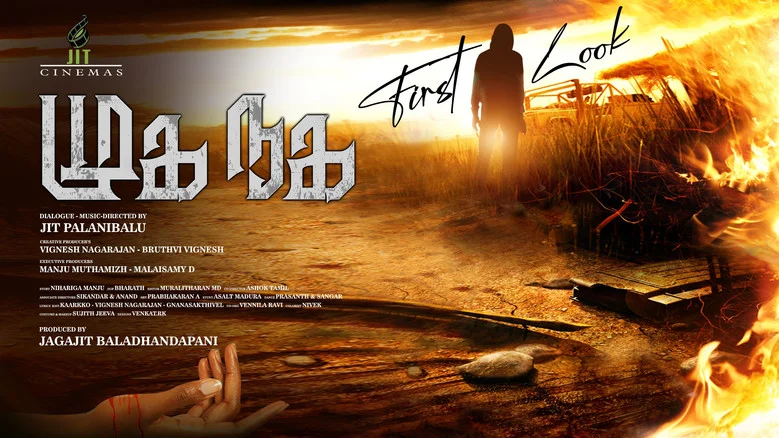
A man consumed by self-loathing turns his inner violence outward, dismantling the one friendship that could have saved him — and Muga Naga builds its entire architecture on that single, corrosive premise. Director Jit Palanibalu’s crime thriller arrives carrying the weight of a genuinely compelling moral question, but whether the film has the structural muscle to sustain it is another matter entirely.
Jit Palanibalu’s Direction Carries Ambition That the Screenplay Cannot Match
The central idea — that revenge is merely self-hatred wearing a more acceptable mask — is a rich one, and Palanibalu clearly believes in it. The direction suggests a filmmaker reaching for something psychologically layered. Yet without a tightly wound screenplay to anchor it, ambition alone produces atmosphere without consequence.
A 110-minute runtime should be lean enough for a crime thriller to maintain tension throughout. The fact that Muga Naga feels considerably longer than its runtime suggests a pacing problem that no directorial instinct can fully correct.
The Betrayal at the Heart of This Film Is Its Most Honest Idea
What Muga Naga does understand — and understands well — is the specific ugliness of betraying someone who trusted you in the name of a cause. The central conflict, a man weaponising friendship as a vehicle for revenge, is morally murky in exactly the right way. Crime thrillers rarely interrogate the perpetrator’s self-destruction this directly. That instinct deserves credit, even when the execution falters.
Without Named Performances, the Film Becomes a Conceptual Exercise
I find it genuinely difficult to assess Muga Naga’s performances when the film arrives with its cast entirely unannounced — which is either a bold artistic choice or a distribution failure, and neither possibility reflects well. Crime thrillers live and die on the credibility of their central figure’s psychological collapse. If the lead performance doesn’t sell self-hatred convincingly, the entire moral architecture collapses with it.
Supporting roles in a revenge-driven crime narrative traditionally exist to humanise or condemn the protagonist. Without knowing who fills these spaces here, evaluating their impact becomes an exercise in critical guesswork.
If you’re drawn to Tamil crime films and psychological thrillers that probe moral complexity, bollyflix.me.uk covers the genre extensively across South Indian cinema.
The Genre Framework Is Familiar, and Muga Naga Doesn’t Subvert It Enough
Crime thrillers built around revenge and friendship betrayal are not uncommon in Indian cinema. The distinguishing factor is always execution — tone, pacing, the precision of the moral argument. Muga Naga appears to understand its genre without significantly reimagining it. That is not fatal, but it does mean the film must work considerably harder on character psychology to justify its existence in a crowded space.
A release date of 27th March 2026 places this film in a competitive theatrical window where audience patience for slow-burn genre experiments is historically limited.
Audience Reception Tells a Story the Film’s Marketing Hasn’t
When a film releases without publicised cast names, critical ratings, or social media traction, audience reception becomes the only honest metric available. Muga Naga’s silence on all fronts — no IMDb score circulating, no BookMyShow buzz — suggests either a very limited release or a film that hasn’t generated the conversation its central idea warrants. Both possibilities point to a disconnect between the film’s thematic intentions and its market execution.
Films with genuinely interesting moral premises often fail not because the idea was wrong, but because the communication around them collapses. Whether Muga Naga’s quietness is strategic or symptomatic is a question only its box office trajectory will answer.
If this kind of psychologically driven but ultimately uneven crime thriller is your territory, the Suyodhana review offers a similar conversation about South Indian genre films that reach for depth and miss the landing.
Muga Naga is a film best approached with calibrated expectations — the central premise of self-hatred driving revenge is genuinely compelling, and Jit Palanibalu shows enough directorial seriousness to suggest he understood what he was attempting. But a film that arrives without a visible cast, without critical dialogue, and without audience momentum asks a great deal of goodwill from viewers walking in cold. Wait for a streaming release where the lower stakes allow the film’s ideas to breathe without the pressure of theatrical commitment.
Muga Naga earns a reluctant 2.5 out of 5 — a film that carries one genuinely good idea and not quite enough filmmaking rigour to make it land with the force it deserves.
For another 2026 release wrestling with premise versus execution, Happy Raj is a different genre but a strikingly similar story of good intentions undermined by structural miscalculation.
Ankit Jaiswal is the Chief Author, covering Indian cinema and OTT releases with honest, no-filler criticism. An SEO strategist by background, he brings a research-driven approach to film writing, cutting through hype to tell you exactly what's worth your time.