Prathichaya (2026): A Ghost of a Film With Nothing to Haunt You


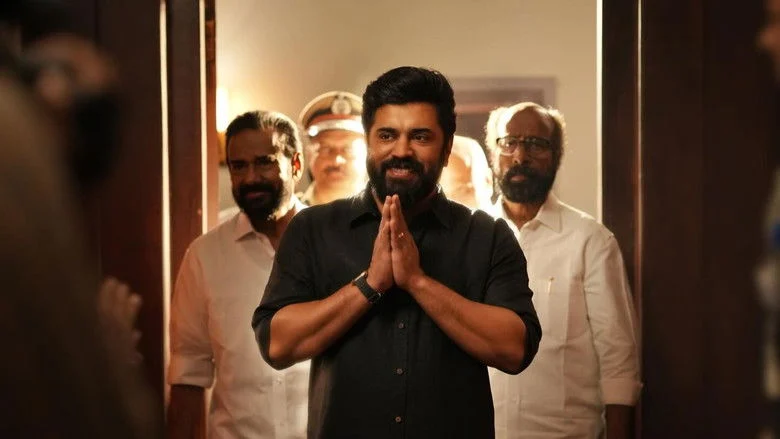
Nivin Pauly walks into a B. Unnikrishnan frame, and somewhere in that collision of actor and director, there should be electricity — the kind Malayalam cinema has delivered so reliably in recent years. Instead, Prathichaya arrives on March 26, 2026, carrying the weight of expectation and the hollow echo of a film that seems uncertain of what it wants to be.
Nivin Pauly Turns Up, But the Film Doesn’t Give Him Anywhere to Go
Nivin Pauly has built a filmography on quiet intensity — the kind of performer who can carry a scene with a glance. Here, without a clearly defined conflict or character arc that criticism has been able to pin down, his presence feels more like a placeholder than a performance.
I find it genuinely frustrating when a capable actor is offered so little to work with. Whether the fault lies in the writing or in directorial choices, the result is a lead performance that registers as competent rather than compelling.
B. Unnikrishnan Directs Like a Man Who Forgot to Write the Second Draft
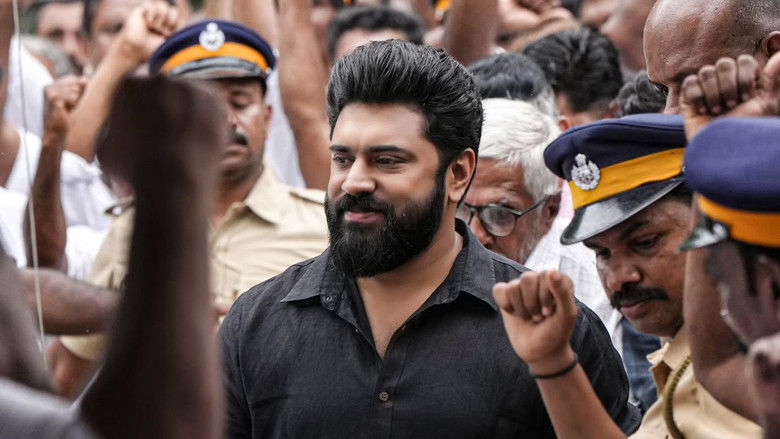
Unnikrishnan, who both writes and directs Prathichaya, has shown in previous work that he understands commercial Malayalam grammar. The concern here is structural — a screenplay that appears to have skipped the draft where motivations are sharpened and stakes are made visible.
Direction and writing from the same hand can produce coherence, but it can also produce blind spots. Without a second voice in the room, the film’s weaknesses go unchallenged from script to screen.
Chandru Selvaraj’s Lens Is the Film’s Most Honest Contributor
Cinematographer Chandru Selvaraj gives Prathichaya its most consistent quality. Even when the narrative loses its footing, the visual language holds — framing that suggests mood even when the screenplay refuses to deliver it.
It is a telling sign when the camera feels more expressive than the characters on screen. Selvaraj’s work here deserves to be seen in a film that matches its ambition.
If you enjoy exploring Malayalam dramas where craft and performance are in proper alignment, bollyflix.me.uk covers a wide range of Malayalam films worth your time alongside this one.
Sharaf U Dheen and Balachandra Menon Deserve More Than Margins
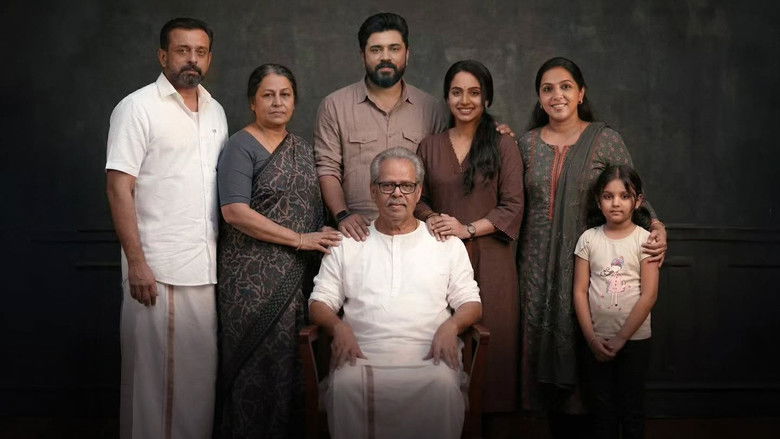
Sharaf U Dheen has demonstrated range across Malayalam cinema, and his presence in the supporting cast is one of the more intriguing elements on paper. Balachandra Menon, a veteran whose screen weight is considerable, similarly suggests depth that the film does not fully excavate.
When supporting actors of this calibre feel underused, it usually points to a screenplay that never decided how many stories it was actually trying to tell. The ensemble is assembled, but not deployed.
No Controversy, No Conversation — And That May Be the Biggest Problem
There are no reported controversies around Prathichaya — no political friction, no censorship battles, no casting storms. Under normal circumstances, that would be unremarkable. Here, it adds to a broader sense that the film has generated almost no conversation of any kind.
A film produced by Gokulam Gopalan under Sree Gokulam Movies carries commercial credibility and industry muscle. That infrastructure can open screens; it cannot manufacture urgency. Audience reception, at the time of this film’s release, seems to mirror critical indifference — a shrug where a reaction should be.
For a different experience of how Malayalam storytelling can grip even when it restrains itself, the Band Melam review on this site is a useful companion read on where the language’s recent romantic films have stumbled.
Prathichaya is the kind of film that is difficult to argue against passionately, because it gives you so little to argue about. If you are a committed Nivin Pauly follower, you will sit through it looking for moments — and you will find fragments, not a film. Wait for a streaming release rather than spending a theatre ticket on a film still searching for its own reason to exist.
Prathichaya (2026) is a watchable but deeply inert Malayalam drama that earns a reluctant 2 out of 5 — technically assembled, narratively absent, and likely forgotten before the credits finish rolling.
If atmospheric Malayalam crime thrillers that wrestle with silence interest you more than surface-level drama, Muga Naga explores that territory with its own set of trade-offs worth examining.
Ankit Jaiswal is the Chief Author, covering Indian cinema and OTT releases with honest, no-filler criticism. An SEO strategist by background, he brings a research-driven approach to film writing, cutting through hype to tell you exactly what's worth your time.